Ever wondered what bills to pay first when broke? Just thinking about this possibility puts you ahead of the “ignore everything and hope” crowd.
When money runs out, paying bills in the wrong order can make a bad month much worse. Start with the bills that protect your shelter, income, health and essential utilities. Then, deal with debts and lower-priority obligations.
This guide shows gig workers exactly what to pay first, what can wait and how to make survival-based decisions without financial guesswork.
Broke? Pay the right bills in the right order
Key takeaways
Housing usually comes first.
Income-preserving expenses can outrank some debts.
Utilities matter more than subscriptions.
Credit card damage hurts, but homelessness hurts more.
Gig workers should treat work tools as essential infrastructure.
Survival budgeting is triage, not ideal financial planning.
What bills to pay first when broke: A financial triage approach
Most budgeting advice assumes you have steady paychecks, predictable bills and the comforting illusion that income arrives on schedule. Gig workers and freelancers know better. Some months you’re flush. Some months you’re eating rice because your banking app balance is just north of zero.
When money is short, the question for you isn’t: “What’s the most responsible financial decision right now?” It’s: “What bills should I pay first to limit the financial damage?” That’s financial triage. Let’s begin.
Why You Can Trust The Wealthy Gigster
We don’t do fluff. And we definitely don’t let advertisers tell us what to say. Every product or service we recommend is vetted using real data, independent research and the financial chaos test: “Would this product or service actually help someone with an irregular income and a rent deadline?”
We rate tools and services based on what matters to gig workers, not 9-to-5ers. If we earn a commission from a partner, you’ll know—but our opinions stay brutally honest, no matter what.
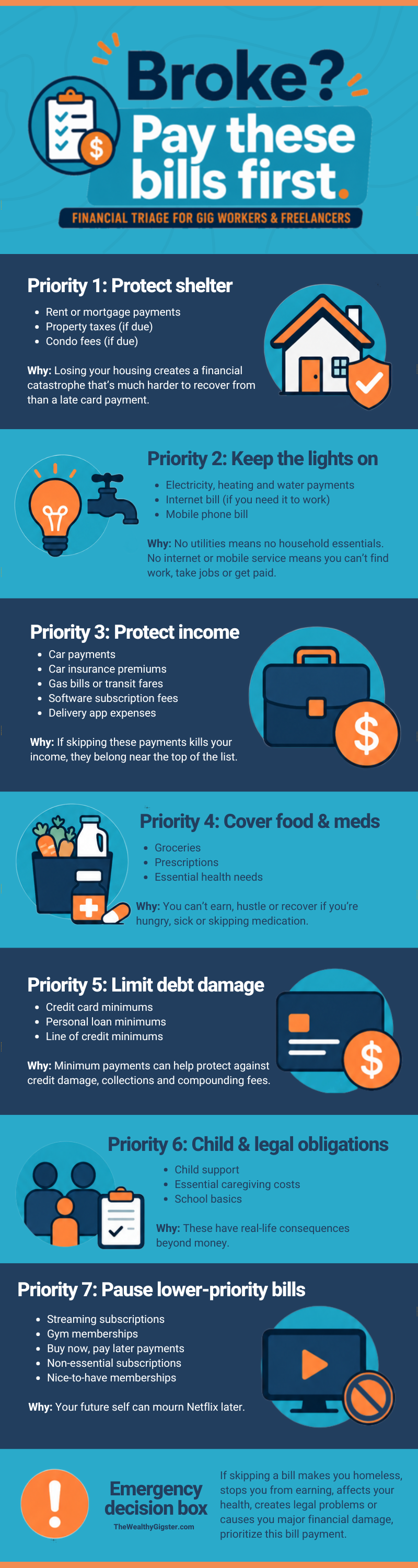
Why: If you can only pay one major bill, shelter usually wins. Because the consequences of skipping housing bills escalate fast. Eviction, late penalties, legal notices, damaged rental history and foreclosure can all come down on your head.
A missed credit card payment hurts. A lost home detonates your life. What bills to pay first when broke becomes a question of survival, not a simple budgeting exercise.
Priority 2: Pay bills that keep your home running
What bills to pay first when broke:
Electricity
Heating
Water
Internet service
Phone service
Why: For gig workers and freelancers, internet and mobile service aren’t luxuries. They’re as essential as your next gig. Here, what bills to pay first when broke becomes a question of income protection.
No phone means no client calls. No internet means no freelance work. No app access means no delivery income. If your livelihood depends on these services, they should be your second priority.
Priority 3: Pay off anything you need to keep earning
What bills to pay first when broke:
Car payments
Auto insurance
Fuel
Transit
Invoicing software
Scheduling tools
Cloud tools
Required business subscriptions
Why: A salaried employee may survive skipping a car payment for a week. An Uber driver? Different story. If you’re a gig worker or freelancer, ask yourself: If I don’t pay this bill, can I still make money? If the answer is no, it moves up your list of bill payment priorities.
Priority 4: Cover food and medication
What bills to pay first when broke:
Groceries
Prescriptions
Essential health needs
Basic hygiene supplies
Baby or caregiving essentials (if you have children)
Why: Food and medication are not optional, even if bank account is emptier than a freelancer’s inbox on January 1. If you are choosing between feeding yourself, filling a prescription or keeping a non-essential bill current, basic health needs come first.
This is not indulgent spending. This is keeping yourself functional enough to survive the month and keep working. Starving yourself or skipping medication to keep a credit card company happy is not a smart financial strategy. It’s crisis budgeting gone sideways.
Priority 5: Make minimum debt payments
What bills to pay first when broke (even if you can only make minimum payments):
Credit cards
Lines of credit
Personal loans
Buy now, pay later plans with steep penalties
Why: Debt matters. Lenders generally don’t care that work dried up, a client paid late or your car needed an unexpected repair. These bills keep coming either way.
Missing minimum payments can trigger fees, credit score damage, collection activity, compounding interest and, worst of all, the mental weight of knowing these problems are growing every moment while you sleep.
But survival comes first. If the choice is Visa or rent, choose rent. Every time.
Priority 6: Meet family and legal obligations
What bills to pay first when broke:
Child support
School essentials
Caregiving obligations
Dependent medication
Required legal payments
Why: Family and legal obligations carry consequences that go far beyond a late fee. Some of these obligations carry legal consequences. Others carry personal consequences. Both matter. Pay these bills, or your life will become harder in ways money alone can’t fix.
Priority 7: Pause what can usually wait
Some of your lower-priority bills can wait. But not forever. Just during crisis mode. These are the bills that may be annoying, inconvenient or mildly guilt-inducing to pause, but they usually won’t threaten your housing, health or ability to keep earning.
Netflix
Spotify
Extra subscriptions
Premium apps
Memberships
Impulse BNPL payments
Non-essential software
Cut these bills out of your life ruthlessly, if necessary. Your future self can mourn Disney+ later.
Still Not Sure What Bills to Pay First When Broke?
Quick Bill-Priority Checklist
If you’re still unsure what bills to pay first when broke, use these five questions to rank every bill by its consequences:
Does this protect housing?
Does this protect income?
Does this protect health?
Does this trigger legal consequences?
Does this only create annoyance?
If paying the bill guarantees housing, electricity, heating, income, health or legal stability, move it up your list of payments. If it only creates annoyance, pause it if you can. You deserve a life that isn’t run by whatever bill screams the loudest.
There’s an easier way to stay on top of your bills
Knowing what bills to pay first when broke is only half the battle. Having a system to track spending and cash flow can help prevent the next crisis.
When you’re broke, guessing your way through bills is a terrible way to spend your free time. The right money app can help you see what’s due, what’s draining your account and where you can free up cash before things get uglier.
If you want help tracking spending, spotting subscriptions or building a basic cash-flow plan, these tools may help.
Rocket Money helps track spending, identify recurring subscriptions and show where your money is going. That can be useful when you need to figure out which expenses can be paused before your essential bills get squeezed.
Best for: Subscription cleanup and spending visibility
Quicken Simplifi helps track spending, organize transactions and forecast cash flow. For gig workers, that can make it easier to see what money is available before deciding which bills to pay first.
Rocket Money earns the top spot because the fastest way to improve your cash flow during a financial crunch is often finding money you’re already spending unnecessarily. The app helps identify recurring subscriptions, forgotten memberships and other expenses quietly draining your account every month.
When you’re deciding which bills to pay first, having a clear picture of where your money is actually going can be just as important as earning more. Rocket Money helps create that visibility quickly and with very little effort, making it one of the most practical tools for gig workers dealing with tight cash flow.
Runner-Up: Quicken Simplifi
Quicken Simplifi takes second place because it excels at helping people understand their overall cash flow. It provides a clearer view of income, spending and upcoming bills, which can be especially useful when earnings fluctuate from week to week.
The reason it falls behind Rocket Money for this particular situation is that someone facing an immediate cash crunch often benefits more from finding expenses to cut right away than from long-term budgeting features. For ongoing financial planning, however, Simplifi remains a strong option.
Frequently Asked Questions (FAQs)
What bills should I pay first when broke?
When you’re broke, pay the bills that protect your housing, income, health and basic utilities first. That usually means rent or mortgage payments, electricity, water, internet and phone service (if needed for work), food, medication and any expenses required to keep earning an income.
Should I pay rent or credit cards first?
Usually rent. Housing instability creates far worse consequences than a missed credit card payment.
Should gig workers prioritize car payments?
If your vehicle is directly tied to your income, you should prioritize this bill. A repossessed work vehicle can instantly kill your earnings.
What if I can’t pay everything?
Prioritize survival and income preservation first. Then, contact creditors proactively. Some may offer hardship arrangements.
Is internet really an essential bill?
Yes, the internet is an essential bill for many gig workers and freelancers. If it directly affects your earning ability, treat it as essential.
Should I use credit cards for emergency bills?
Sometimes, but only if the alternative is a worse immediate consequence like being evicted, getting your utilities shut off or losing your ability to work and earn money.
Get Smarter with Your Irregular Income
Get free calculators, checklists, planners, worksheets and tips built for freelancers, self-employed workers and independent earners with irregular income.