

Published on June 20, 2026
Written by The Wealthy Gigster Team
Edited by Kevin Nishmas, Managing Editor
As a gig worker, how much emergency savings do you need? Saving one month of essential expenses is a solid starting point. Ideally, your emergency fund should grow to cover three to six months of expenses, providing protection against slow periods, illness, client losses and income interruptions.
Don’t put off building your emergency savings. Gig workers, freelancers and independent contractors like you don’t have the luxury of getting a paycheck every two weeks like clockwork. When your income has more ups and downs than a rollercoaster, emergency savings may be the only income protection you have.
This guide explains how much emergency savings gig workers really need, how to calculate your personal target and how to build an emergency buffer that fits your irregular-income lifestyle.
Table of Contents
- Key Takeaways
- How Much Emergency Savings Do Gig Workers Need? The Short Answer
- The Gig Worker Emergency Fund Ladder
- How to Calculate Your Emergency Fund Target
- Factors That Affect How Much Emergency Savings You Need
- How to Build Emergency Savings Faster
- The Biggest Emergency Fund Mistakes Gig Workers Make
- How Financially Stable Gig Workers Think About Emergency Savings
- There’s an Easier Way to Build Emergency Savings
- Frequently Asked Questions (FAQs)
- Methodology
Key takeaways
- Most gig workers should start with a $1,000 to $2,000 starter emergency fund.
- Saving the equivalent of one month’s essential expenses is a practical first milestone.
- Covering three months of expenses provides meaningful income protection.
- Covering six months of expenses offers maximum flexibility and stability.
- Emergency fund targets depend on income volatility, debt levels and household responsibilities.
- Building savings gradually is often more effective than chasing a large target immediately.
- Emergency savings and debt repayment often need to happen together.
- Financial stability comes from preparation, not predictions.
Why You Can Trust The Wealthy Gigster
We don’t do fluff. And we definitely don’t let advertisers tell us what to say. Every product or service we recommend is vetted using real data, independent research and the financial chaos test: “Would this product or service actually help someone with an irregular income and a rent deadline?”
We rate tools and services based on what matters to gig workers, not 9-to-5ers. If we earn a commission from a partner, you’ll know—but our opinions stay brutally honest, no matter what.
Want the receipts? Check out our About Us, Editorial Standards and Advertising Disclosure pages for how we work and what makes our recommendations worth your time (and money).
How Much Emergency Savings Do Gig Workers Need? The Short Answer
Most gig workers should aim to save enough money to cover at least one month of essential expenses. If you have highly unpredictable income, seasonal income swings or limited support systems, you may be better off saving the equivalent of three to six months of expenses.
The exact amount depends on your income stability, monthly obligations and overall financial situation. Instead of trying to save everything at once, it often makes more sense to build your emergency fund one level at a time.
The Gig Worker Emergency Fund Ladder
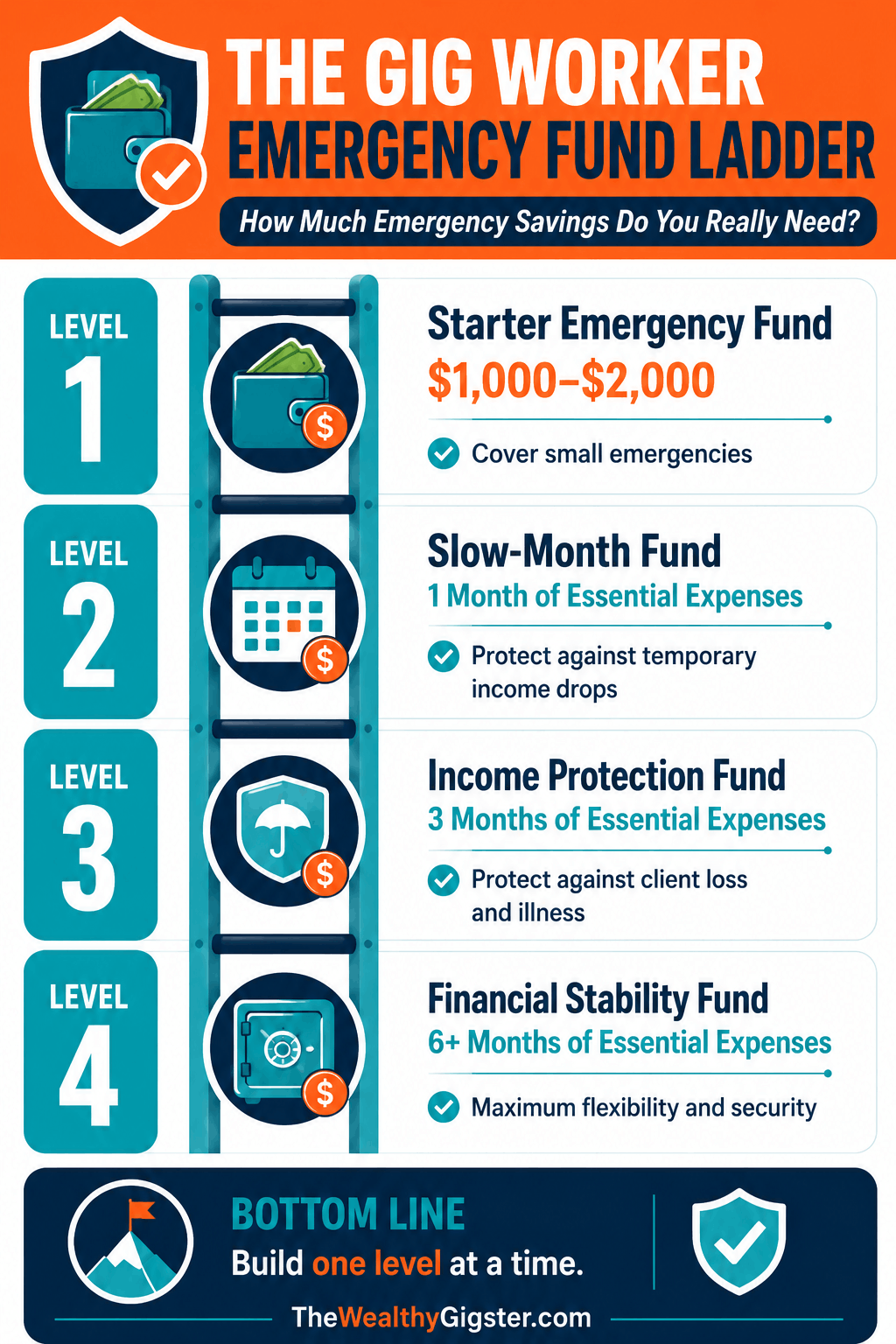
Most freelancers don’t need to save six months of expenses overnight. Building emergency savings becomes much easier when you approach it one level at a time.
The Gig Worker Emergency Fund Ladder provides a practical roadmap for creating a financial shield without feeling overwhelmed.
Level 1: Starter Emergency Fund
How much emergency savings do you need? $1,000–$2,000
This first level helps you cover smaller emergencies before they become larger financial problems.
What smaller emergencies you should cover:
- Car repairs
- Medical bills
- Emergency travel
- Equipment replacement
- Unexpected household expenses
For many gig workers and freelancers, reaching this level creates the first real layer of financial breathing room.
Level 2: Slow-Month Fund
How much emergency savings do you need? Equal to one month of essential expenses
This level is designed specifically for freelancers and gig workers. Instead of covering emergencies, it helps you survive a slow month of income without relying on credit cards or loans to pay your essential expenses.
What essential expenses you should cover:
- Housing
- Utilities
- Food
- Transportation
- Insurance
- Minimum debt payments
Level 3: Income Protection Fund
How much emergency savings do you need? Equal to three months of essential expenses
At this stage, your emergency fund becomes a genuine income-protection tool.
Covering three months of expenses gives you more time to:
- Replace lost clients
- Find additional work
- Recover from illness
- Navigate economic slowdowns
- Manage temporary disruptions
Level 4: Financial Stability Fund
How much emergency savings do you need? Equal to six months or more of essential expenses
This level offers maximum financial maximum flexibility and stability.
A larger emergency fund can reduce your financial stress, prevent rash financial decisions and provide greater financial freedom to handle unexpected events, without making desperate financial choices.
While not every worker will reach this level immediately, it represents a strong long-term goal.
How to Calculate Your Emergency Fund Target
So, how much emergency savings do you need, really? Start by calculating your essential monthly expenses.
Focus on the expenses that keep your household running smoothly:
- Housing
- Utilities
- Food
- Insurance
- Transportation
- Minimum debt payments
Multiply that number by the level of protection you want to achieve.
Real-world example:
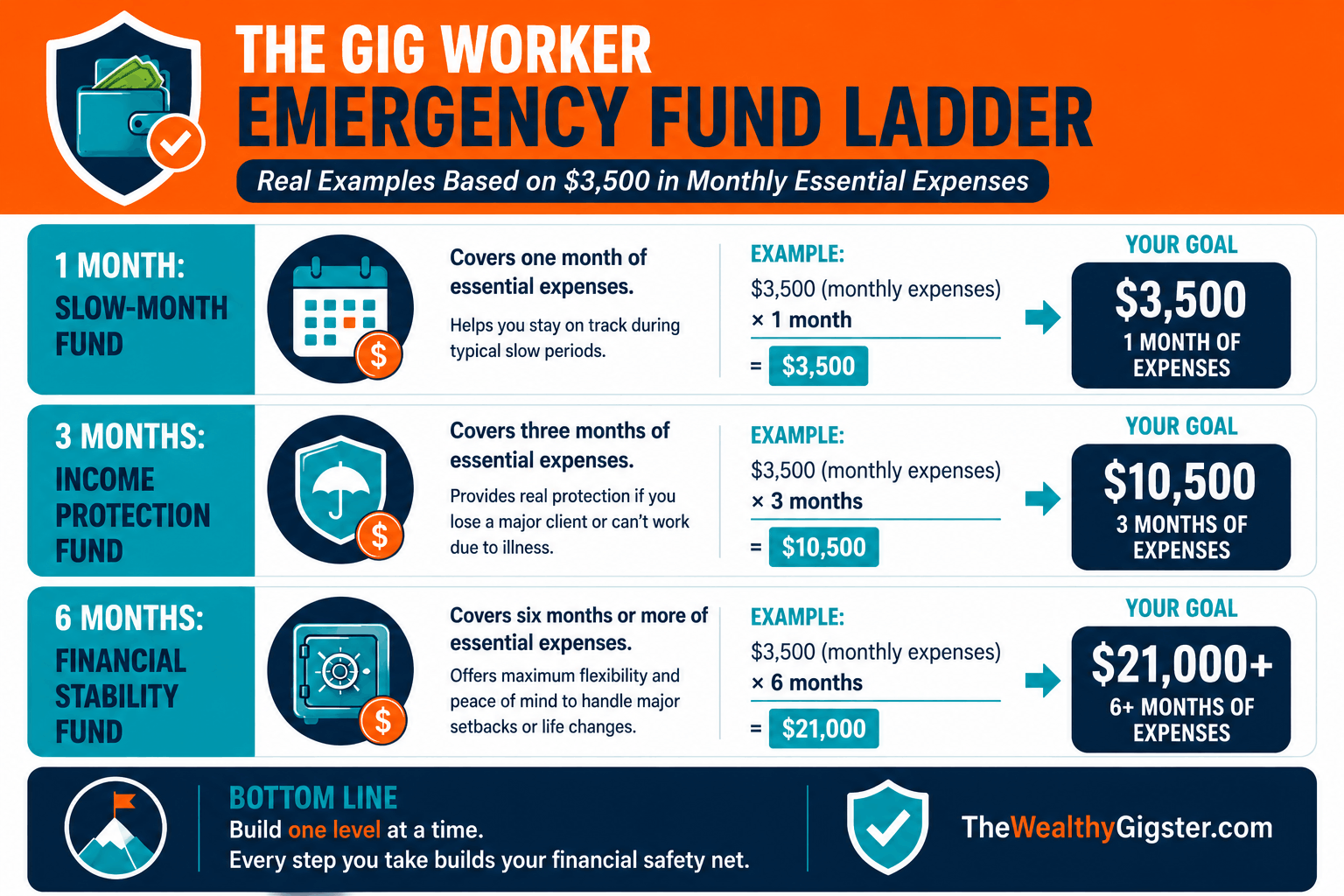
Remember, the goal isn’t perfection. The goal is progress. You need to start from somewhere. Every dollar you save moves you one step closer to financial stability.
Factors That Affect How Much Emergency Savings You Need
No two gig workers face the same level of risk. A part-time side hustler with a steady day job doesn’t need the same emergency fund as a full-time freelancer supporting a household on client work alone. Many factors can increase or decrease your savings target.
Income Volatility
Gig workers with highly inconsistent income generally benefit from larger emergency funds than those with more predictable freelance income.
Household Responsibilities
Supporting children, a spouse or other dependents often increases the amount of savings you need to be financially stable in the face of an emergency.
Debt Levels
Higher debt can increase financial pressure during slow periods. If you’re unsure whether to save money or pay off debt first, you may need a larger emergency reserve to avoid relying on credit when income drops.
Access to Other Resources
A dual-income household, strong family support network or additional income streams may reduce the amount of emergency savings you need.
How to Build Emergency Savings Faster
Building an emergency fund doesn’t require huge deposits. Small, consistent contributions often win the race.
Automate Savings
Treat savings like a recurring bill and move money automatically whenever income arrives.
Save During Strong Months
When income exceeds expectations, direct a portion of the extra money toward your emergency fund before lifestyle inflation takes over.
Reduce Fixed Expenses
Lower monthly expenses can free up more cash for savings and reduce the size of the emergency fund you need.
Create Additional Income Streams
Diversifying income can help you save more faster, reducing overall financial risk in the long run.
The Biggest Emergency Fund Mistakes Gig Workers Make
Most freelancers know they should have emergency savings. The hard part is actually building the fund, leaving it alone and knowing when to use it.
When income goes up and down, it’s easy to make choices that feel reasonable in the moment but create bigger problems later. Here are the emergency fund mistakes that can leave gig workers short on cash when they need it most.
Trying to Save Six Months Immediately
Large savings goals can feel overwhelming. Focus on one level at a time.
Using Savings for Non-Emergencies
Vacations, impulse purchases and lifestyle upgrades are not emergencies. Protect your emergency fund for situations that genuinely threaten your financial stability.
Ignoring Savings Because Debt Exists
Many gig workers delay saving until all their debt disappears. In reality, building savings and reducing debt often need to happen at the same time.
Treating Good Months Like Permanent Income
Strong months are opportunities to strengthen your financial position, not reasons to increase spending. Good months come and go, but the financial protection you build during them can help you weather any storm.
How Financially Stable Gig Workers Think About Emergency Savings
Financially stable gig workers and freelancers don’t view emergency savings as a luxury. They view it as part of doing business. They understand that income fluctuations, slow periods and unexpected expenses are normal parts of self-employment.
Follow a simple approach can help you match your savings target to your actual level of financial risk. The decision tree below shows how to determine the emergency fund that’s right for your situation.
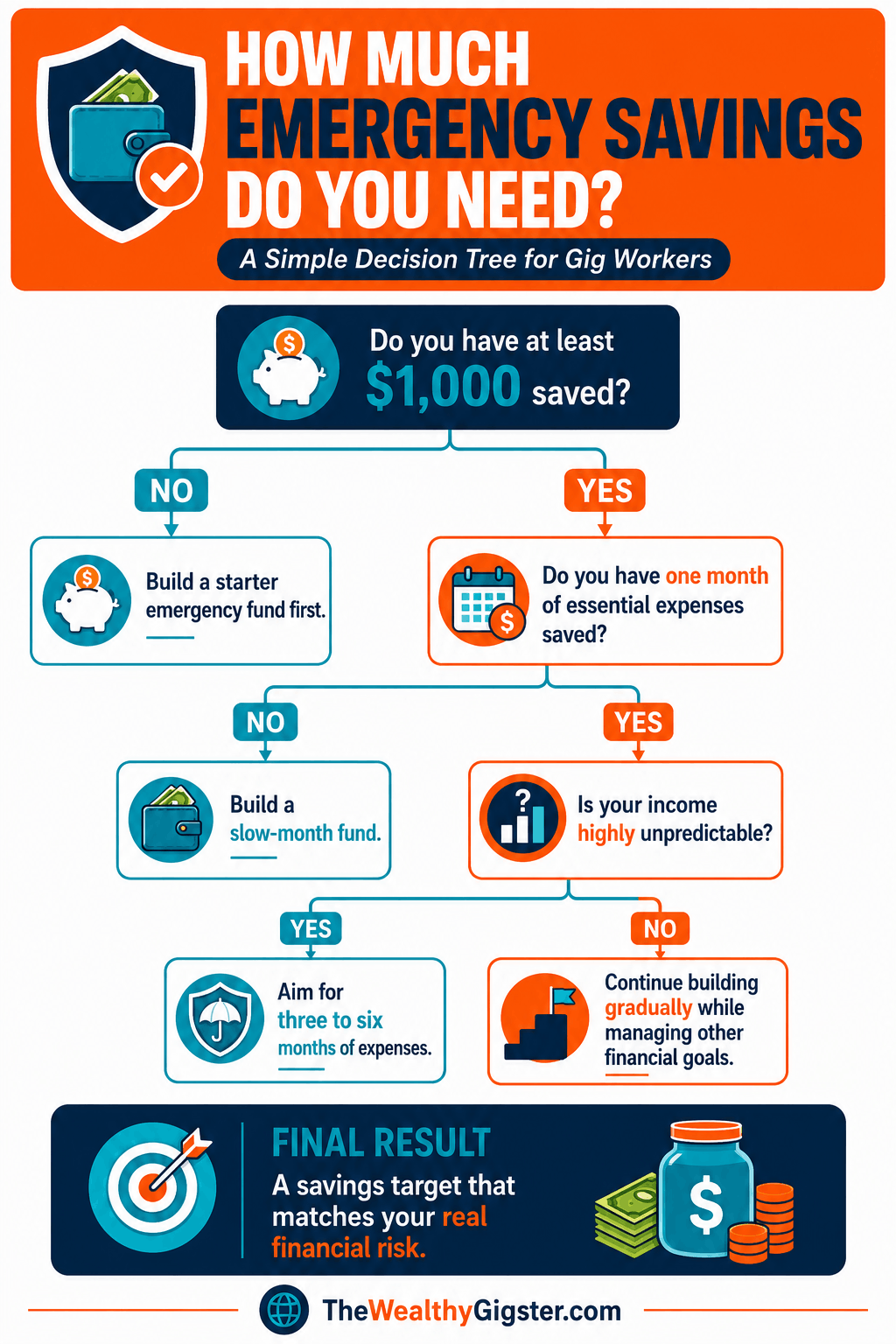
By working through a simple decision-making process, you can build an emergency fund that provides meaningful protection without feeling overwhelmed, turning every financial emergency into manageable inconveniences.
There’s an Easier Way to Build Emergency Savings
The right financial tools can help you save more consistently, track progress and stay focused on your goals. The products below help gig workers and freelancers build emergency savings to manage irregular income more effectively.
YNAB
YNAB helps gig workers assign every dollar a purpose before it gets spent. That proactive approach can make it easier to build emergency savings consistently, even when income varies from month to month.
Best for: Building emergency savings with irregular income.
Pros
- Built for assigning every dollar a job
- Helpful for irregular income planning
- Strong goal-tracking features
- Encourages proactive savings habits
Cons
- Requires regular upkeep
- May take time to learn
- Paid subscription required
Monarch Money
Monarch Money provides a clear view of income, expenses, debt and savings goals in one place. That visibility helps gig workers and freelancers track their emergency fund progress and identify opportunities to save more.
Best for: Monitoring cash flow and savings growth.
Pros
- Clear financial dashboard
- Helpful for tracking goals
- Shows income, spending and savings together
- Useful for household financial planning
Cons
- Paid subscription required
- Setup can take time
- Not focused only on emergency savings
Rocket Money
Rocket Money helps gig workers and freelancers identify recurring expenses and subscription costs that may be slowing down their savings progress.
Best for: Finding extra money to redirect toward savings.
Pros
- Can help identify unused subscriptions
- Simple spending visibility
- Useful for freeing up savings cash
- Helpful for recurring expense reviews
Cons
- Premium features may cost extra
- Savings depend on current spending habits
- Not a full budgeting replacement
Our Top Pick: YNAB
Emergency savings don’t grow by accident. They grow because money gets assigned a purpose before it gets spent. YNAB helps gig workers build that habit, making it easier to save consistently during both strong months and slow ones.
Runner-Up: Monarch Money
Monarch Money earns second place because building savings starts with visibility. The platform helps freelancers see exactly where their money is going and track progress toward emergency fund goals.
Frequently Asked Questions (FAQs)
How much emergency savings do gig workers need?
Most gig workers should aim for at least one month of essential expenses, with three to six months providing stronger protection against slow periods, illness, client loss and income interruptions.
Is $1,000 enough for an emergency fund?
A $1,000 emergency fund is a good starting point, but most freelancers and gig workers will benefit from building larger reserves over time.
Should I save money or pay off debt first?
Many gig workers benefit from building a starter emergency fund while simultaneously paying down high-interest debt. Savings can help prevent new debt when income drops or unexpected expenses hit.
What expenses count toward an emergency fund target?
Housing, utilities, food, transportation, insurance and minimum debt payments are usually included when calculating an emergency fund target.
How long does it take to build an emergency fund?
The timeline depends on income, expenses and savings rate. For gig workers with irregular income, consistent progress usually matters more than speed.
Methodology
This article evaluates emergency savings strategies through the lens of freelance work, self-employment and irregular income. Recommendations prioritize financial resilience, cash-flow stability and practical implementation. Because gig workers often face income volatility, the guidance focuses on building emergency savings levels that can withstand slow periods, unexpected expenses and temporary income interruptions while supporting long-term financial stability.
Featured image credit:
Photo by Amitav Hira on Unsplash