

Published on June 13, 2026
Written by The Wealthy Gigster Team
Edited by Kevin Nishmas, Managing Editor
What happens if you get sick and can’t work? For many gig workers running themselves ragged, that’s a scary what-if they prefer to push out of their minds. But ignoring it won’t stop the bills from coming due when you’re laid up in bed with no way to earn money.
For most traditional employees, getting sick is just stressful. For gig workers, freelancers and self-employed earners with no paid sick days, no employer disability plan and no guaranteed paycheck waiting in the wings, becoming ill can quickly become a financial emergency.
If your income stops when you stop working, even a short illness can affect your bills, savings and financial stability. But there are ways to prepare for the unexpected.
This guide explains what happens if you get sick and can’t work, the financial risks gig workers face and the steps you can take now to protect yourself before illness interrupts your income.
Table of Contents
- Key Takeaways
- The Short Answer: What Happens If You Get Sick and Can’t Work?
- Why Getting Sick Hits Gig Workers Differently
- The Financial Risks of Being Unable to Work
- How Long Could You Survive Without Working?
- How to Protect Your Income Before You Get Sick
- Your First Line of Defense: Emergency Savings
- Your Second Line of Defense: Disability Insurance
- What Expenses Should You Prioritize?
- How to Reduce the Risk Before You Get Sick
- There’s an Easier Way to Protect Your Income
- Frequently Asked Questions (FAQs)
- Methodology
Key takeaways
- Most gig workers do not have paid sick leave.
- Income can stop immediately when you’re unable to work.
- Emergency savings are often your first line of defense.
- Disability insurance can help replace lost income.
- Multiple income streams can reduce financial risk.
- Essential expenses should be prioritized during a work interruption.
- Planning before illness happens is significantly easier than scrambling afterward.
- Financial stability depends on preparation, not luck.
Why You Can Trust The Wealthy Gigster
We don’t do fluff. And we definitely don’t let advertisers tell us what to say. Every product or service we recommend is vetted using real data, independent research and the financial chaos test: “Would this product or service actually help someone with an irregular income and a rent deadline?”
We rate tools and services based on what matters to gig workers, not 9-to-5ers. If we earn a commission from a partner, you’ll know—but our opinions stay brutally honest, no matter what.
Want the receipts? Check out our About Us, Editorial Standards and Advertising Disclosure pages for how we work and what makes our recommendations worth your time (and money).
The Short Answer: What Happens If You Get Sick and Can’t Work?
For most gig workers, income stops when work stops. If you’re unable to drive, deliver, freelance, consult, create content or perform client work, your earnings may immediately decline or disappear entirely.
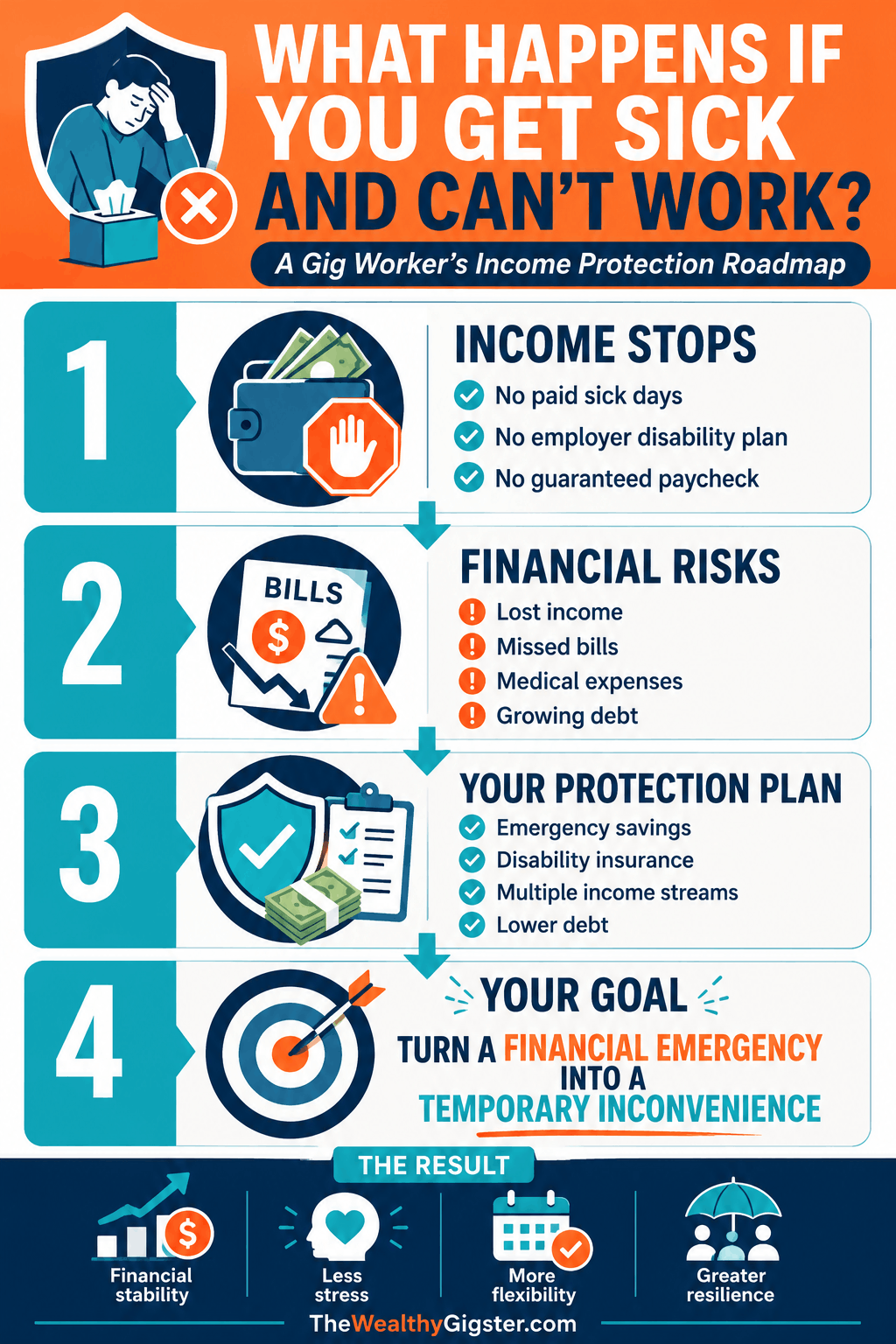
The impact on your financial health depends on these deciding factors:
- How long you’re unable to work
- Whether you have emergency savings
- Whether you have disability insurance
- How much debt you’re carrying
- Whether someone else contributes to household income
Protecting your income from life’s unexpected setbacks, like illnesses, injuries and work interruptions, is one of the most important financial priorities for anyone who earns money outside traditional employment.
Why Getting Sick Hits Gig Workers Differently
A two-week illness can feel very different depending on how you earn your income. Traditional employees often have benefits designed to soften the financial impact of illness. Gig workers usually don’t.
A salaried employee may have access to these benefits:
- Paid sick days
- Short-term disability benefits
- Long-term disability coverage
- Employer health insurance
- Paid leave programs
Most freelancers and independent contractors have to create their own safety net.
For gig workers, that means planning ahead for the days when illness, injury or burnout makes working impossible, because no one else is automatically stepping in to replace the income.
The Financial Risks of Being Unable to Work
Getting sick affects more than your income. A work interruption can create multiple financial problems all at once.
Lost Income
This is usually the biggest risk. No work often means no earnings, which can quickly affect your ability to cover essential expenses.
Missed Bills
Housing, utilities, insurance, debt payments and groceries don’t stop because you’re sick. Without any safety net, your bills can pile up surprisingly quickly.
New Medical Expenses
Depending on your situation, illness can create additional expenses such as prescriptions, treatments, transportation or medical equipment.
Increased Debt
Many gig workers rely on credit cards when income disappears. Unfortunately, borrowing can turn a temporary illness into a longer-term debt problem.
How Long Could You Survive Without Working?
This is one of the most important questions every gig worker should ask. Imagine your income stopped tomorrow.
Before you think about insurance, side gigs or emergency plans, start with the basics: how many essential expenses could you still cover if no new money came in?
- Housing
- Utilities
- Food
- Insurance
- Minimum debt payments
- Transportation
- Medical expenses
Your answer helps determine how vulnerable you are to an income interruption. If you’re like many freelancers, you may discover that your cash cushion is smaller than you expected.
How to Protect Your Income Before You Get Sick
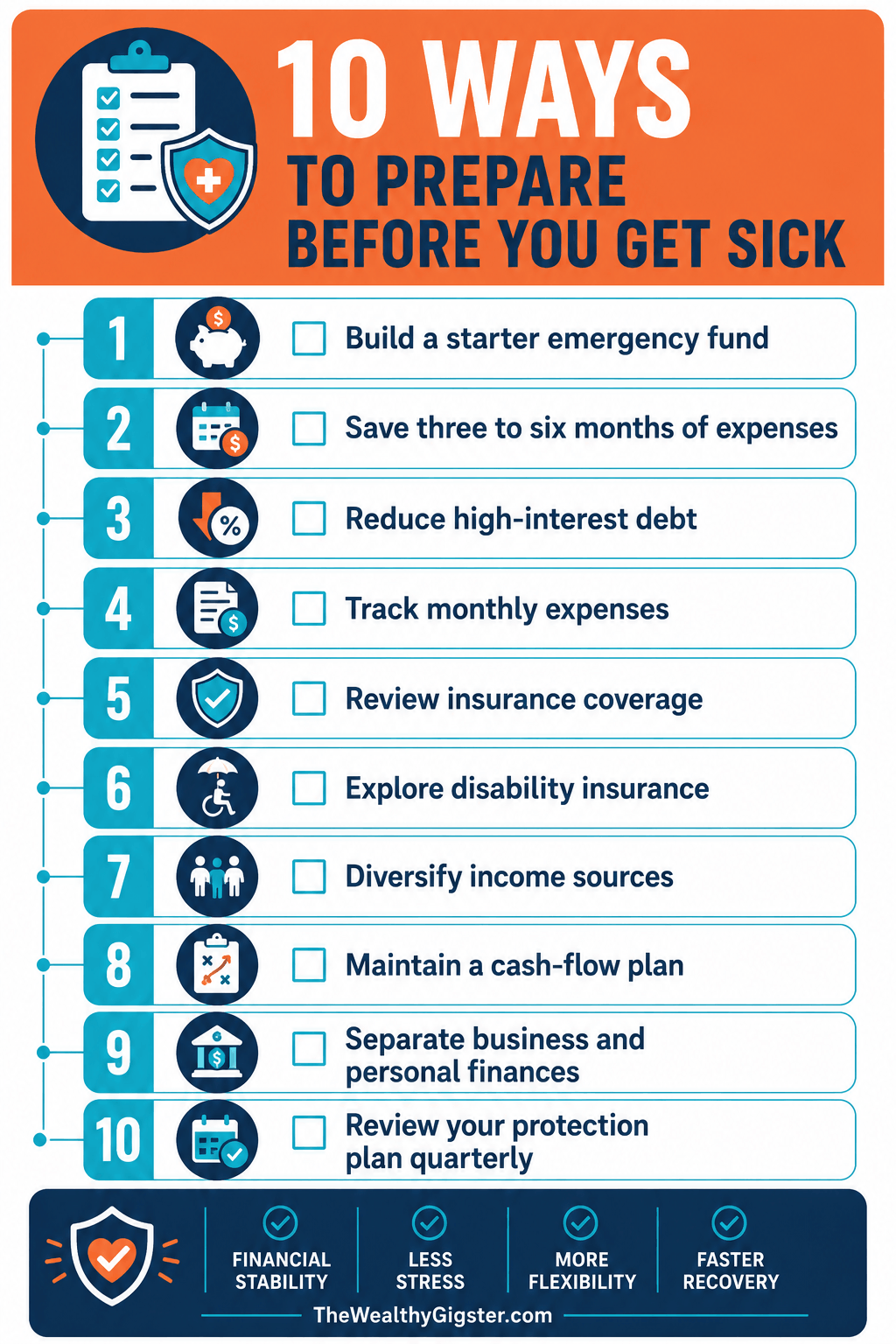
Your First Line of Defense: Emergency Savings
Emergency savings often provide the fastest and most flexible protection against lost income. Unlike insurance claims, emergency funds are immediately available when you need them.
Starter Goal
Aim to save at least $1,000 to $2,000 initially. This can help absorb smaller disruptions without relying on debt.
Long-Term Goal
Most gig workers should eventually work toward three to six months of essential expenses. Workers with highly unpredictable income may benefit from an even larger cushion.
Your Second Line of Defense: Disability Insurance
Emergency savings can only stretch so far. For longer illnesses or injuries, disability insurance may become critical.
Disability insurance replaces a portion of your income if you’re unable to work due to illness or injury. While nobody likes paying insurance premiums, the alternative can be far more expensive.
Short-Term Disability Insurance
Designed to cover temporary work interruptions lasting weeks or months.
Long-Term Disability Insurance
Designed to provide income replacement during longer-term illnesses or disabilities.
For many self-employed workers, this is one of the few ways to protect future earning power.
What Expenses Should You Prioritize?
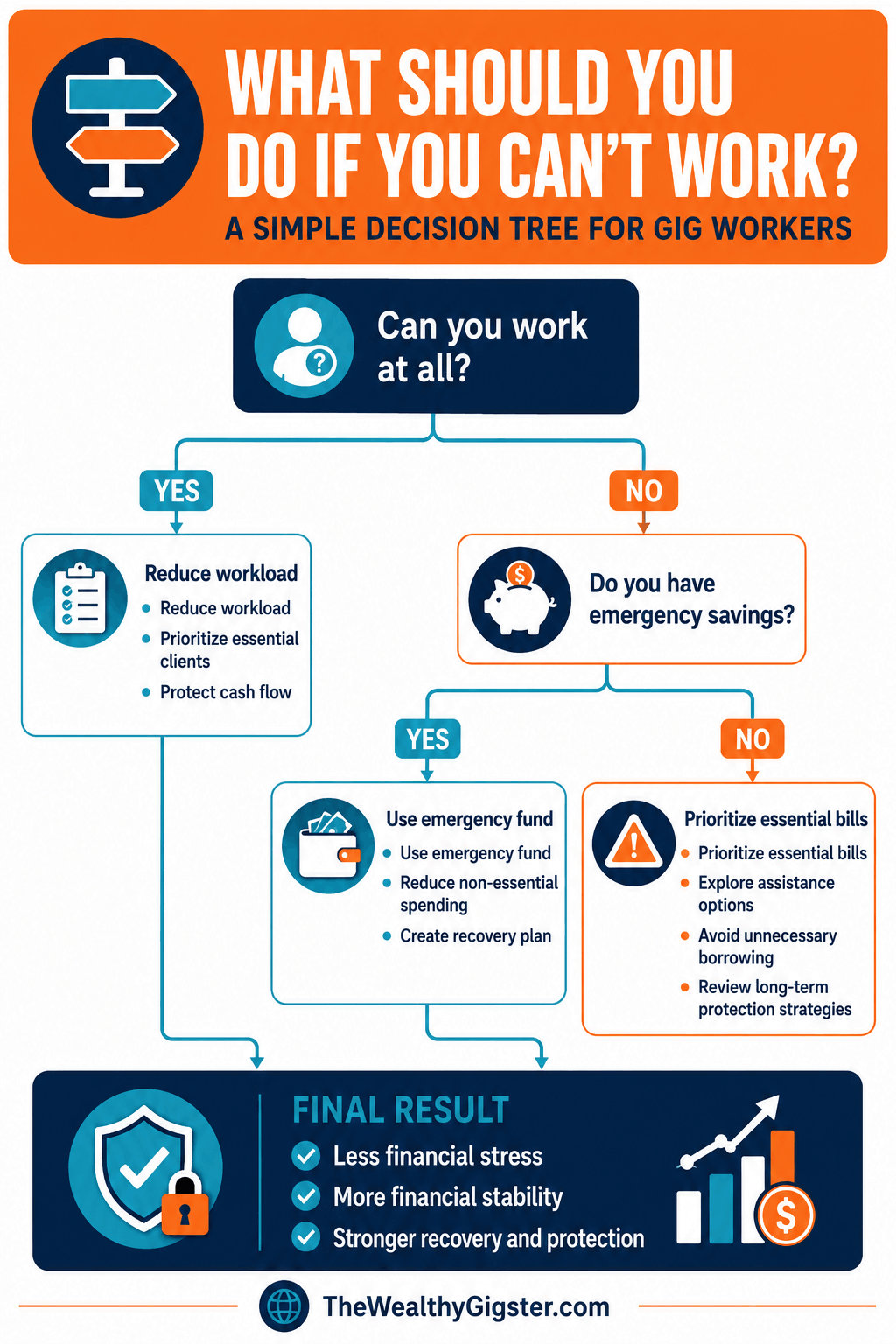
If illness affects your income, not every bill deserves equal priority. Pay the essential bills first.
Housing
Rent or mortgage payments should generally remain the highest priority.
Utilities
Electricity, heat and water help keep your household running smoothly.
Food and Medical Needs
Basic health and nutrition become even more important during illness.
Minimum Debt Payments
Making minimum payments can help limit credit damage while you recover.
Everything Else
Optional spending may need to be reduced or paused temporarily.
How to Reduce the Risk Before You Get Sick
The best time to prepare for an income interruption is before it happens. While you can’t predict when illness or injury might strike, you can take steps now to reduce the financial damage if it does. Even a few small changes can make the difference between a temporary setback and a full-blown financial crisis.
Build Emergency Savings
Even small savings balances improve financial resilience.
Create Multiple Income Streams
Diversified income can reduce dependence on any single source of earnings.
Consider Disability Insurance
Insurance helps transfer some financial risk away from your savings.
Reduce High-Interest Debt
Lower debt obligations create more flexibility during difficult periods.
Review Your Financial Plan Quarterly
Regular reviews help ensure your protection strategy keeps pace with changes in income and expenses.
What Happens If You Get Sick and Can’t Work? Build Your Safety Net Before You Need It
There’s an Easier Way to Protect Your Income
Preparing for an illness or injury can feel overwhelming when you’re already managing fluctuating income, client work and everyday expenses. The right financial tools can help you build a safety net, organize your finances and create a plan before an income interruption becomes a crisis.
The tools below can help gig workers strengthen their financial resilience and reduce the impact of losing income temporarily.
YNAB (You Need A Budget)
YNAB helps gig workers plan ahead by assigning every dollar a job. That makes it easier to build emergency savings, prepare for slow periods and avoid relying on debt when income disappears.
Best for: Freelancers and gig workers building an emergency fund.
Pros
- Excellent for irregular income
- Encourages proactive planning
- Strong goal-setting tools
- Helpful educational resources
Cons
- Monthly subscription required
- Learning curve for new users
- Requires active participation
Monarch Money
Monarch Money gives freelancers a complete view of income, expenses, debt and savings goals in one place.
Best for: Gig workers managing multiple income streams and financial priorities.
Pros
- Comprehensive dashboard
- Cash-flow tracking
- Goal monitoring
- Strong account integration
Cons
- Subscription required
- More features than some users need
- Initial setup takes time
Policygenius
Policygenius makes it easier to compare disability insurance options, helping self-employed workers evaluate income protection coverage.
Best for: Freelancers exploring disability insurance.
Pros
- Easy comparison process
- Multiple providers
- Educational resources
- Transparent shopping experience
Cons
- Insurance premiums add cost
- Coverage availability varies
- Requires underwriting
Our Top Pick: YNAB
YNAB earns the top spot because financial preparation is ultimately about one question: “What happens if income stops tomorrow?” YNAB helps freelancers answer that question before they need to.
By helping users build emergency savings, prioritize spending and prepare for income fluctuations, YNAB directly supports the financial stability strategies discussed throughout this article.
For gig workers trying to create a financial buffer against illness or injury, it’s one of the most practical tools available.
Runner-Up: Policygenius
Policygenius takes second place because emergency savings can only carry you so far. For longer illnesses or injuries, disability insurance often becomes the missing piece of a complete income-protection strategy.
Policygenius makes it easier to compare options and understand what’s available without spending hours researching insurance providers individually.
Frequently Asked Questions (FAQs)
What happens if you get sick and can’t work as a freelancer?
For most freelancers, income slows down or stops entirely when they cannot work. That’s why emergency savings, disability insurance and financial planning are so important.
Do gig workers get paid sick leave?
Most gig workers and independent contractors do not receive paid sick leave because they are not traditional employees.
How much emergency savings should gig workers have?
Most gig workers should aim for at least three to six months of essential expenses. Those with highly unpredictable income may benefit from a larger emergency fund.
Should freelancers buy disability insurance?
Many freelancers should consider disability insurance because their income depends directly on their ability to work. Coverage can help replace a portion of lost income during illness or injury.
Can I use a credit card if I get sick and can’t work?
You can, but relying on credit cards can create long-term debt problems. Emergency savings are usually a safer first option.
What bills should I pay first if my income stops?
Most financial experts recommend prioritizing housing, utilities, food, medical expenses and minimum debt payments before non-essential spending.
How can freelancers prepare for an unexpected illness?
Building emergency savings, reducing high-interest debt, diversifying income sources and exploring disability insurance can all improve financial resilience.
Methodology
This article evaluates income-protection strategies through the lens of gig worker finances, self-employment and irregular income. Recommendations prioritize financial resilience, emergency preparedness and practical risk management rather than theoretical optimization.
Because freelancers and gig workers often lack employer-sponsored benefits, the guidance focuses on strategies that help reduce the financial impact of illness, injury and temporary work interruptions.
The goal is to help self-employed earners create greater financial stability, reduce reliance on debt and build systems that can withstand unexpected disruptions.
Featured image credit:
Photo by Thi Nguyen Duc on Unsplash