

Published on June 18, 2026
Written by The Wealthy Gigster Team
Edited by Kevin Nishmas, Managing Editor
Knowing how to prepare for a slow month, before it happens, can save you months of scrambling to make ends meet. Unfortunately, many gig workers and freelancers don’t start planning until their income takes a nosedive.
Slow months are a normal part of gig work. Clients disappear. Orders dry up. Projects get delayed. Algorithms change. What separates financially stable gig workers from stressed-out ones isn’t luck. It’s preparation.
This guide explains how to prepare for a slow month before it happens, spot the warning signs early and create a financial buffer that helps you stay in control when your income slows down or dries up completely.
Table of Contents
- Key Takeaways
- How to Prepare for a Slow Month Before It Happens: The Short Answer
- Why Slow Months Happen
- The Slow-Month Survival System
- 10 Signs a Slow Month Is Coming
- What Should You Do If Your Income Drops?
- The Biggest Slow-Month Mistakes Gig Workers Make
- How Financially Stable Gig Workers Think Differently
- There’s an Easier Way to Prepare for a Slow Month
- Frequently Asked Questions (FAQs)
- Methodology
The Slow-Month Survival System
This simple survival system can help you prepare for income slowdowns before they become financial emergencies.
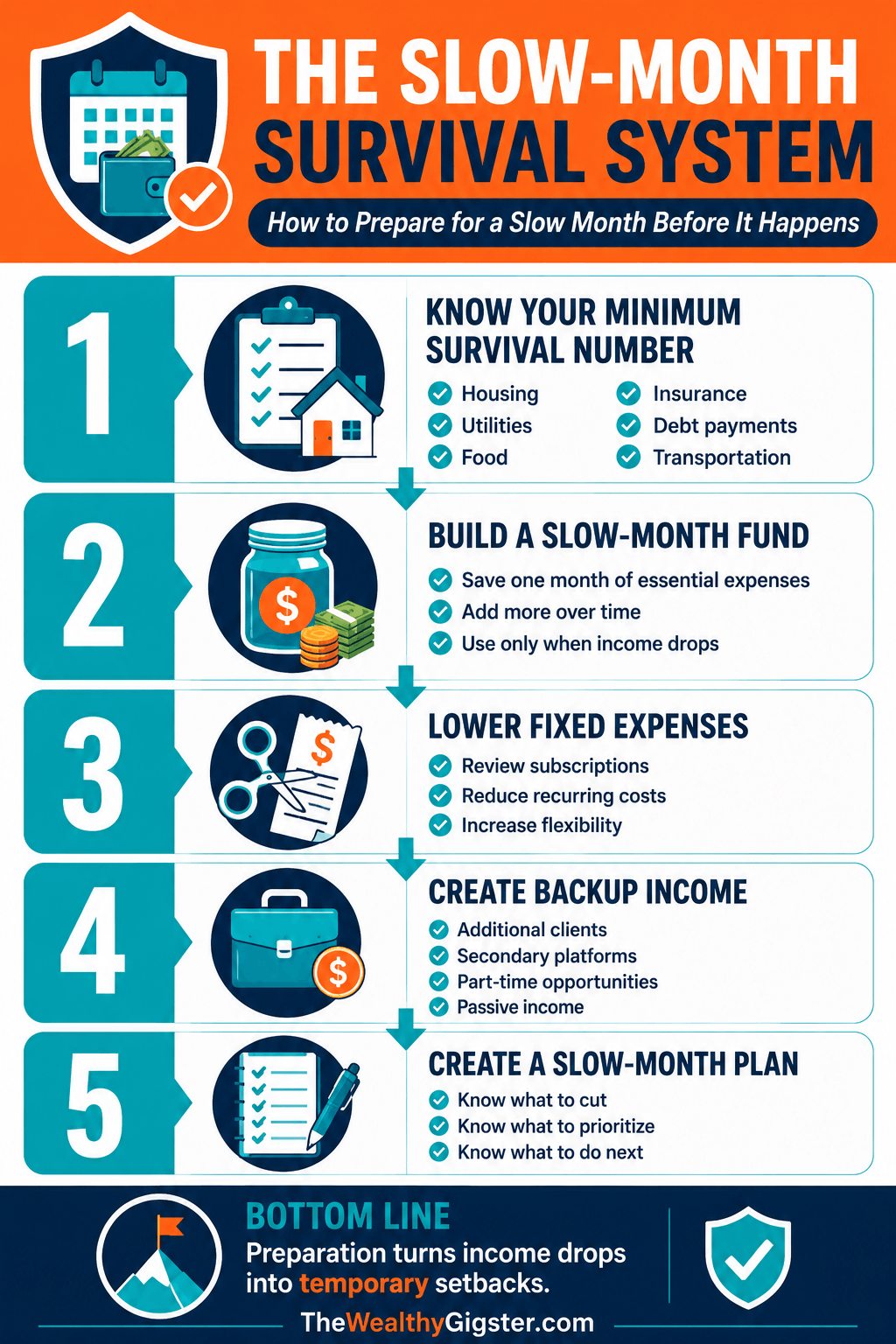
Bottom line: Rather than reacting when work dries up, you’ll already know what steps to take, what expenses to prioritize and how to protect your cash flow until you start earning income again.
Now that you’ve seen the overall game plan, let’s take a closer look at the five steps that can help protect your finances when income slows down.
Key Takeaways
- Slow months are normal in gig work.
- Financial stability comes from preparation, not predictions.
- Emergency savings can soften the impact of income drops.
- Tracking cash flow helps identify problems early.
- Multiple income streams reduce financial risk.
- Lower fixed expenses create more flexibility.
- A slow-month plan removes panic from decision-making.
- Preparing early is easier than reacting later.
Why You Can Trust The Wealthy Gigster
We don’t do fluff. And we definitely don’t let advertisers tell us what to say. Every product or service we recommend is vetted using real data, independent research and the financial chaos test: “Would this product or service actually help someone with an irregular income and a rent deadline?”
We rate tools and services based on what matters to gig workers, not 9-to-5ers. If we earn a commission from a partner, you’ll know—but our opinions stay brutally honest, no matter what.
Want the receipts? Check out our About Us, Editorial Standards and Advertising Disclosure pages for how we work and what makes our recommendations worth your time (and money).
How to Prepare for a Slow Month Before It Happens: The Short Answer
The best way to prepare for a slow month is to build financial flexibility before you need it.
What that means for gig workers, freelancers, independent contractor and the self-employed:
- Building emergency savings
- Tracking your income trends
- Lowering fixed expenses
- Creating backup income sources
- Knowing exactly which expenses matter most
In other words, you’re not powerless when your income suddenly drops. You may not control when a slow month shows up, but you can control how prepared you are when it starts messing with your money.
Why Slow Months Happen
Many gig workers assume slow months are personal failures. They’re usually not. Income fluctuations are often built into freelance and gig work.
The most common causes of slow months:
- Seasonal demand changes
- Client budget cuts
- Economic downturns
- Platform algorithm changes
- Increased competition
- Unexpected personal circumstances
Remember, the goal here isn’t to eliminate slow months. Your mission, today and every day, is to survive them without causing too much damage to your financial health.
The Slow-Month Survival System in 5 Steps
Most gig workers don’t need a complicated financial plan to survive slow months. They need a simple system they can follow before income drops.
The Slow-Month Survival System focuses on five practical steps that create financial stability when work becomes unpredictable.
Step 1: Know Your Minimum Survival Number
Start by calculating the minimum amount of money your household needs each month to function.
Focus on these life essentials:
- Housing
- Utilities
- Food
- Transportation
- Insurance
- Minimum debt payments
Knowing how much money you need to make your household run smoothly helps you understand exactly how much income you need to survive a slow period.
Step 2: Build a Slow-Month Fund
A slow-month fund is separate from long-term investing goals. Its only job is to help cover expenses when income temporarily drops. Even one month of essential expenses can provide significant peace of mind.
Step 3: Lower Your Fixed Expenses
The lower your mandatory monthly costs, the easier it becomes to survive income fluctuations. Review subscriptions, memberships, recurring bills and discretionary spending regularly to spot expenses you can cut before a slow month hits. Every dollar you don’t need to spend on these fixed expenses increases your financial flexibility during slow months.
Step 4: Create Backup Income Streams
Relying on one source of income increases the risk of one slowdown throwing your entire month off course. Diversifying your income can help reduce the impact of losing clients, contracts or platform work. Even modest secondary income sources can make a meaningful difference during slower periods.
Step 5: Create a Slow-Month Action Plan
The worst time to make financial decisions is during a financial crisis. Create a written plan that helps you map out exactly how you’ll respond if your income starts to decline.
What your written plan should include:
- Which expenses can be reduced
- Which bills get paid first
- When to use emergency savings
- When to pursue additional work
Having a plan can reduce your stress and improve your decision-making.
Start with Our Free Slow Month Worksheet Template
Reading about slow-month planning is one thing. Actually putting a plan in place is another. To help you get started, we created the Slow Month Action Plan Worksheet.
This tool helps you calculate your minimum survival number, identify which bills need to be paid first, uncover expenses you can cut and create a recovery plan before your income takes a hit.
Spend a few minutes filling it out now and you’ll have a clear game plan ready for the next time work slows down.
Download our free Slow-Month Action Plan Worksheet now.
10 Signs a Slow Month Is Coming
Slow months often provide warning signs before income actually drops.
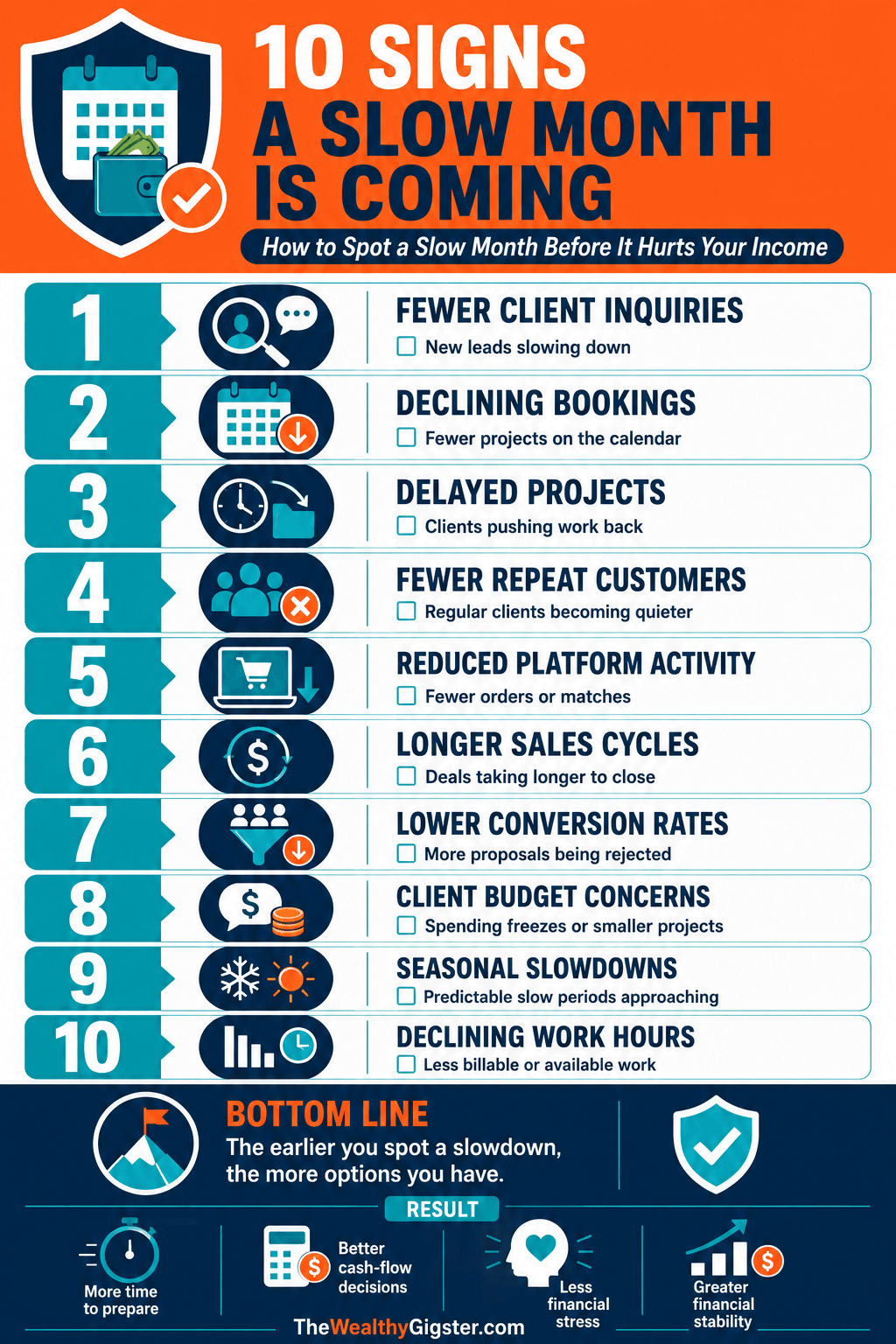
What gig workers, freelancers and independent contractors need to watch for:
- Fewer client inquiries
- Declining bookings
- Reduced platform activity
- Fewer repeat customers
- Longer sales cycles
- Project delays
- Reduced hours
- Lower conversion rates
- Clients mentioning budget concerns
- Seasonal slowdowns
Recognizing these signs early gives you more time to respond before a slow month takes hold.
What Should You Do If Your Income Drops?
Even with preparation, income declines can still sneak up on you. The key is responding strategically instead of emotionally.
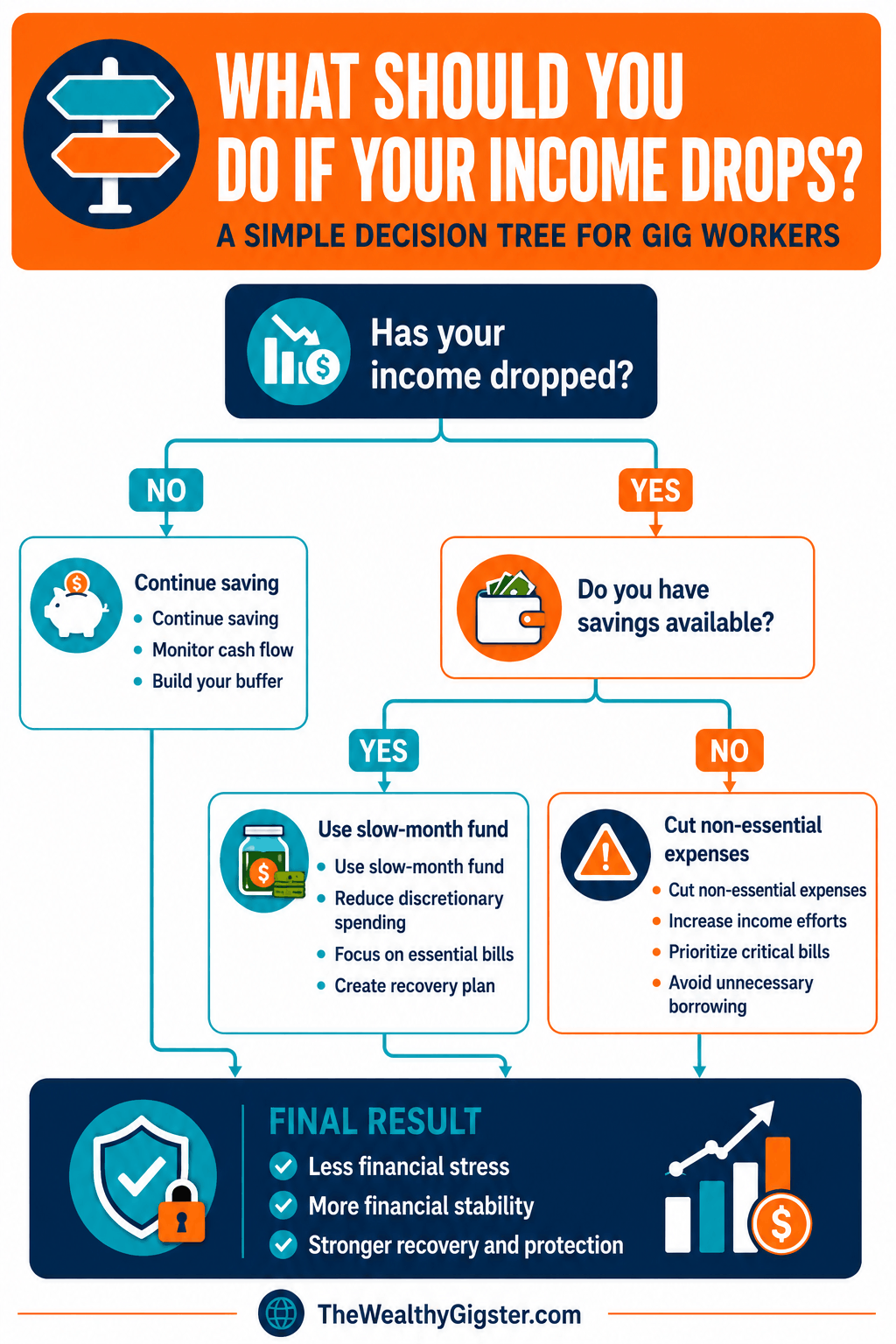
Reduce Non-Essential Spending
Pause discretionary spending like entertainment, streaming subscriptions, takeout meals, impulse purchases and other non-essential expenses until your income stabilizes. Even temporary adjustments can help preserve cash flow.
Prioritize Essential Bills
Housing, utilities, food and minimum debt payments should generally come first. These expenses help keep a roof over your head, essential services running and your most important financial obligations current while you work through a temporary income decline.
Use Emergency Savings Carefully
This is exactly what emergency savings are designed for. Use them intentionally rather than impulsively, Cover essentials first, stretch the money you saved carefully and avoid panic spending that could leave you short later in the month.
Increase Income Efforts
Reach out to former clients, explore additional gigs and reactivate dormant opportunities. Small wins can add up quickly.
The Biggest Slow-Month Mistakes Gig Workers Make
Many income problems become bigger than they need to be because of avoidable mistakes. Here are the slow-month traps that can turn a temporary income dip into a longer financial headache.
Ignoring Warning Signs
Many gig workers and freelancers see a slowdown happening but wait too long to react. By the time their income has dropped, they have fewer options and less room to adjust.
Using Credit Cards as a Long-Term Solution
Debt may provide temporary relief, but it can create larger problems later. A slow month is hard enough without adding high-interest payments to next month’s bills.
Cutting Savings Too Early
Protecting your cash reserves is still important during uncertain periods. If your income is unstable, draining your savings too quickly can leave you exposed to financial risk if the slowdown lasts longer than expected.
Waiting Until Income Hits Zero
The earlier you respond, the more options you typically have. Don’t wait until your account balance is gasping for air before cutting expenses, chasing new work or using your backup plan.
How Financially Stable Gig Workers Think Differently
Financially stable gig workers and freelancers don’t assume every month will deliver steady income. They understand that income fluctuations are a normal part of self-employment and plan for them accordingly.
Instead of hoping slow months won’t happen, they accept that some periods will be busier than others. During strong months, they build savings, reduce debt and create financial breathing room that can help carry them through slower periods.
Instead of asking, “What if a slow month happens?” financially stable gig workers ask, “What will I do when a slow month happens?” That small shift in thinking turns slow months from financial emergencies into manageable setbacks that create the stability that many gig workers need.
There’s an Easier Way to Prepare for a Slow Month
Managing irregular income becomes much easier when you have tools that help you track cash flow, build savings and create a plan before income starts slipping.
The tools below can help gig workers identify financial problems earlier, organize their money more effectively and build a stronger buffer against slow periods.
YNAB (You Need A Budget)
YNAB helps gig workers assign every dollar a job, making it easier to build savings, prepare for income fluctuations and create a financial cushion for slower months.
Best for: Freelancers and gig workers building a slow-month fund.
Pros
- Excellent for irregular income
- Strong goal-setting tools
- Encourages proactive planning
- Helps prioritize spending
Cons
- Monthly subscription required
- Learning curve for beginners
- Requires ongoing participation
Monarch Money
Monarch Money provides a complete view of income, expenses, debt and savings goals, helping gig workers spot financial problems before they become emergencies.
Best for: Workers managing multiple income streams.
Pros
- Comprehensive financial dashboard
- Cash-flow visibility
- Goal tracking
- Strong account integration
Cons
- Subscription required
- Initial setup takes time
- More features than some users need
Rocket Money
Rocket Money helps users identify recurring expenses, manage subscriptions and uncover opportunities to reduce fixed monthly costs.
Best for: Gig workers looking to lower monthly expenses.
Pros
- Easy-to-use interface
- Subscription tracking
- Budgeting tools
- Spending visibility
Cons
- Some features require premium plan
- Savings depend on user action
- Not designed specifically for freelancers
Our Top Pick: YNAB
YNAB earns the top spot because slow-month planning depends on giving your money a job before income starts getting weird.
Instead of treating good months like bonus money, YNAB helps gig workers set cash aside for the months when work slows down, clients delay payments or bookings drop.
That makes it especially useful for freelancers who want a practical system for turning unpredictable income into a more stable financial plan.
Runner-Up: Monarch Money
Monarch Money takes second place because slow months are easier to manage when you can see the big picture early.
The Monarch Money dashboard can help you track income, expenses, debt and savings in one place, which makes it easier to notice when your cash flow goes south.
For freelancers managing multiple income streams, that kind of visibility can help turn “something feels off” into a clear plan of action.
Frequently Asked Questions (FAQs)
How do you prepare for a slow month as a freelancer?
The best approach is to build savings, reduce fixed expenses, diversify income sources and create a plan before income starts declining.
How much savings should gig workers have for a slow month?
Many gig workers benefit from keeping at least one month of essential expenses available, while larger emergency funds provide greater protection.
What is a slow-month fund?
A slow-month fund is money set aside specifically to cover expenses during temporary income declines.
What should I do when freelance income drops?
Focus on essential expenses, reduce discretionary spending, use emergency savings carefully and increase efforts to generate new income.
Should I use credit cards during a slow month?
Credit cards can provide temporary relief, but relying on debt long term can create additional financial problems.
What are the warning signs of a slow month?
Fewer client inquiries, declining bookings, delayed projects and reduced repeat business often signal that income may be slowing down.
How can I make my income more predictable?
Building recurring revenue, diversifying income streams, maintaining savings and budgeting for irregular income can all improve financial stability.
Methodology
This article evaluates slow-month planning strategies through the lens of gig worker finances, self-employment and irregular income. Recommendations prioritize financial stability, cash-flow management and practical preparation rather than theoretical optimization. Because freelancers and gig workers often experience fluctuating income, the guidance focuses on building flexibility, reducing financial stress and creating systems that can withstand temporary income declines. The goal is to help self-employed earners prepare for slow periods before they happen and reduce the financial impact when they do.